
Two-way SMS: how you can send and receive messages without complications
June 11, 2026
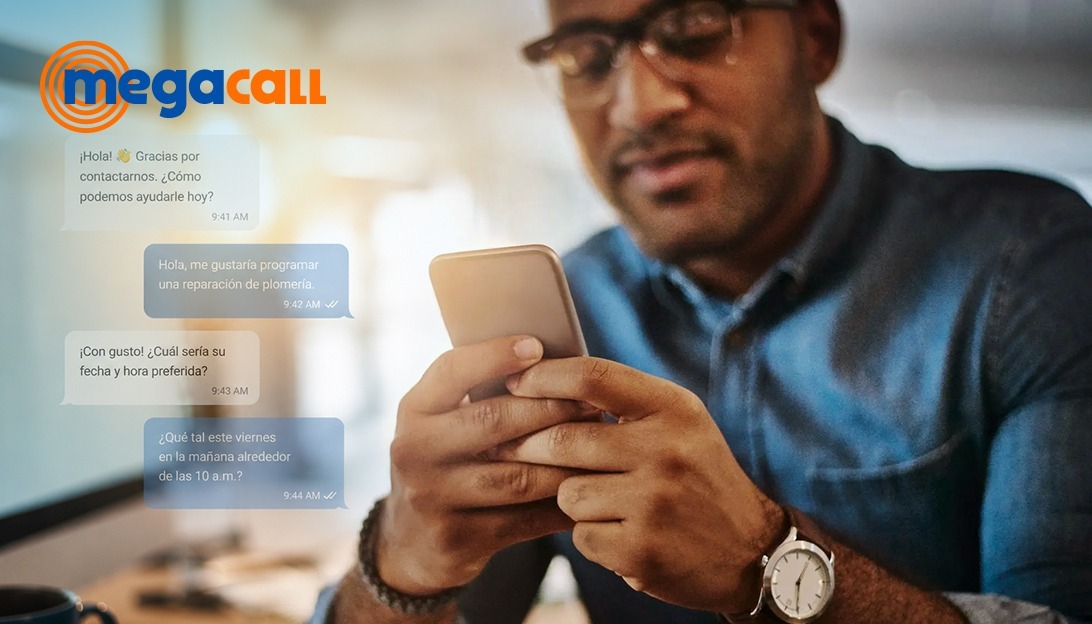
SMS messaging is another communication channel a company uses to connect with its customers, where responses matter. That is why it is important to work with a two-way SMS option that allows the customer not only to receive information, but also to reply and maintain direct contact with the company.
To achieve this, we need a numbering system and a platform that enables these two-way SMS capabilities. Being able to create customizable messages and centralize all communication in a single environment would be ideal. We will look at what makes two-way messaging interesting for a business and how it can be achieved.
What is 2-way SMS messaging or two-way SMS?
2-way SMS messaging, as the name suggests, is a system that allows you to send text messages to customers and receive their replies through the same channel. It is used in scenarios where the company needs a response from the customer, for example for appointment confirmations. The message stops being purely informational, and what we aim for is a direct interaction between the company and the customer within the same conversation thread.
In two-way messaging, long numbers are mostly used, as they allow sending and receiving SMS in both directions, based on standard phone numbering such as virtual numbers. This differs from formats like short codes, which are more commonly used for things like voting in contests or certain customer service interactions; these types of numbers are more expensive and usually operate within a single country.
In the case of virtual long numbers, communication is extended internationally, allowing SMS messages to be sent and received from different countries, depending on the coverage offered by the number and the provider.
For example, Megacall offers a selection of local numbers in different countries, allowing us to get closer to the audience. With this, we get a secure two-way channel and greater control over managing responses within a corporate environment.
Why use two-way SMS in business communication
SMS has been an established communication channel for a long time, and experience shows that it opens up sales opportunities to a very large audience.
It is a channel that continues to deliver a high open rate. According to a Sender study – SMS Marketing Open Rate Statistics (2026) – SMS has a 98% open rate, surpassing even email on average, since almost all SMS messages are opened, while many emails are often ignored.
When we add the ability to reply—that is, what makes it two-way—it becomes even more valuable, bringing benefits such as:
A positive customer experience
Sometimes users do not want to depend on a phone call to confirm appointments or handle certain tasks. Although calls are important for many reasons, customers also value having the option to respond to an SMS at the time that suits them best, without depending on schedules or a “scheduled” phone call, while still maintaining direct contact with the company.
Greater control over conversations
It allows all customer responses to be centralized in a single environment, making it easier to maintain a clear view of each interaction. Instead of managing scattered messages or relying on different channels, the company can track each conversation in an organized and accessible way.
Segmentation and personalization
Thanks to systems that enable sending and receiving SMS, each message can be created from scratch or based on a preconfigured template depending on the type of communication. In addition, by having customer information centralized in one system, messages can be segmented and tailored to each profile.
For example, one customer may receive a promotion with a discount code, while another may receive a satisfaction survey after a service.
Campaign tracking
SMS is very useful for tracking campaigns and collecting customer information. It is a two-way channel, meaning communication flows in both directions, so the company can receive responses in real time and see how a promotion, sales action, or satisfaction survey is performing. This makes it easy to obtain feedback without the need for any additional tools.
Ways to use two-way messaging – 2 Ways SMS
SMS fits into many everyday business scenarios, especially where there is direct interaction. Its value lies in enabling that immediate response that helps complete processes. For example, some possible uses include:
Customer satisfaction surveys
One way to use two-way messaging is after a purchase or service. For example, a company can send an SMS asking about the customer’s experience, and the customer replies with a rating.
A/B testing promotions
It is also a way to test which type of offer works best. Two different promotional SMS messages can be sent to different groups, and the results can be analyzed to see which one performs better.
Appointment confirmations
This is probably the most commonly used option. Reminder messages for appointments where the customer can reply to confirm or cancel.
Reply-based reminders
In processes such as payments, renewals, or due dates, an SMS can be sent allowing the customer to reply confirming an action or requesting more information, for example.
Service activation
When a customer signs up for a service, two-way SMS can be used to complete activation. For example, the user receives a message and replies confirming to finalize the sign-up or activate an account.
How do I start using two-way messaging in my business?
Choose your 2-Way SMS provider
Choosing the right messaging provider that allows two-way communication (sending and receiving) is the first step. You should also consider factors such as whether the provider is reliable, if they are transparent with pricing, if they offer integration with other systems, and whether they provide always-available technical support.
Other aspects worth considering—if you want to keep things simple—are whether the platform is easy and intuitive to use, so that someone with no prior experience can navigate it without issues. Customization and scalability (growth potential) are also important factors.
Set up your virtual number
Once you have your phone number for sending and receiving messages, the next step is configuration. At this stage, it is common to first set up routing, forwarding, and automated replies, so that you can create a communication flow. In addition, virtual numbers make it much easier to control responses because all the information is centralized in one place.
For companies handling a high volume of messages, these platforms are especially useful, as they help structure conversations better, assign them appropriately, and track each interaction.
Customize your SMS message
Depending on the objective, messages can be created from scratch or using preconfigured templates where only specific fields need to be filled in. In addition, systems like Megacall allow bulk SMS sending for campaigns or large-scale notifications, always with the option to tailor content to different customer segments.
You can usually also configure the Sender ID, displaying the company name instead of a number. This option clearly increases recognition and trust, although it generally involves additional costs.
Megacall for 2-Way SMS messaging
With Megacall, you can try how two-way SMS messaging works in just a few steps:
- Create your Megacall account if you’re not yet part of the platform.
- Choose your number and top up your account balance or select the plan that best suits you.
- Submit the required documentation depending on the country of the number.
- Once your number is activated: make calls, send and receive SMS, and manage all your business communication.
Sending SMS with Megacall
- From the personal account, with the option to select contacts from the phonebook
- From the Megacall app for Android and iOS
- From the Megacall CRM
- Via API
Receiving SMS with Megacall
- From the Megacall app
- By email (SMS-to-email)
- From the platform in your personal account
- Through messaging apps such as Facebook, Telegram, and Slack
- In Megacall CRM and other management tools
In this way, both sending and receiving SMS are covered within Megacall, allowing all communication to be managed without leaving the platform.
But how much do SMS messages cost?
First of all, receiving SMS is free, and in the case of Megacall, it is only activated when the number has been connected for at least 3 months.
Sending SMS via VoIP telephony is much cheaper than the traditional method. You can see this clearly with Megacall, although the price depends on the numbering and the destination country. For example, sending an SMS to Spain costs around €0.04, making this channel affordable for regular use without high costs.
FAQs – 2 Ways SMS
What is the limit of virtual numbers per account for receiving SMS?
It depends on the provider. In the case of Megacall, SMS reception is available for a maximum of 10 virtual numbers per account.
Can the sender ID be customized in two-way SMS?
Yes, the SMS sender can be configured. In Megacall’s case, a name or a number can be displayed to the recipient, available only for legal entities. Sender ID registration is only required when using a name as the sender; if a number is used as the sender, no application is needed.
Why is two-way SMS better than one-way SMS?
While one-way SMS is mainly used for informing, two-way SMS enables interaction within the same channel. This makes it easier to perform actions such as confirming appointments, resolving questions, or completing processes without needing calls or other communication channels.
Do two-way SMS messages work in all countries?
No, two-way SMS does not work the same way in all countries. Its availability depends on local regulations, the type of numbering used, and the conditions of operators in each region.
Can bulk SMS be sent and individual replies received?
Yes, it is possible to send bulk SMS messages and receive individual replies within the same two-way messaging campaign. In this setup, each message is sent in a personalized or segmented way to a contact base, but user responses are received individually and linked to each conversation.
You may also like…

The 400 prefix and the new regulation for commercial calls
September 28, 2026

Call whispering: the discreet support that improves calls
September 14, 2026